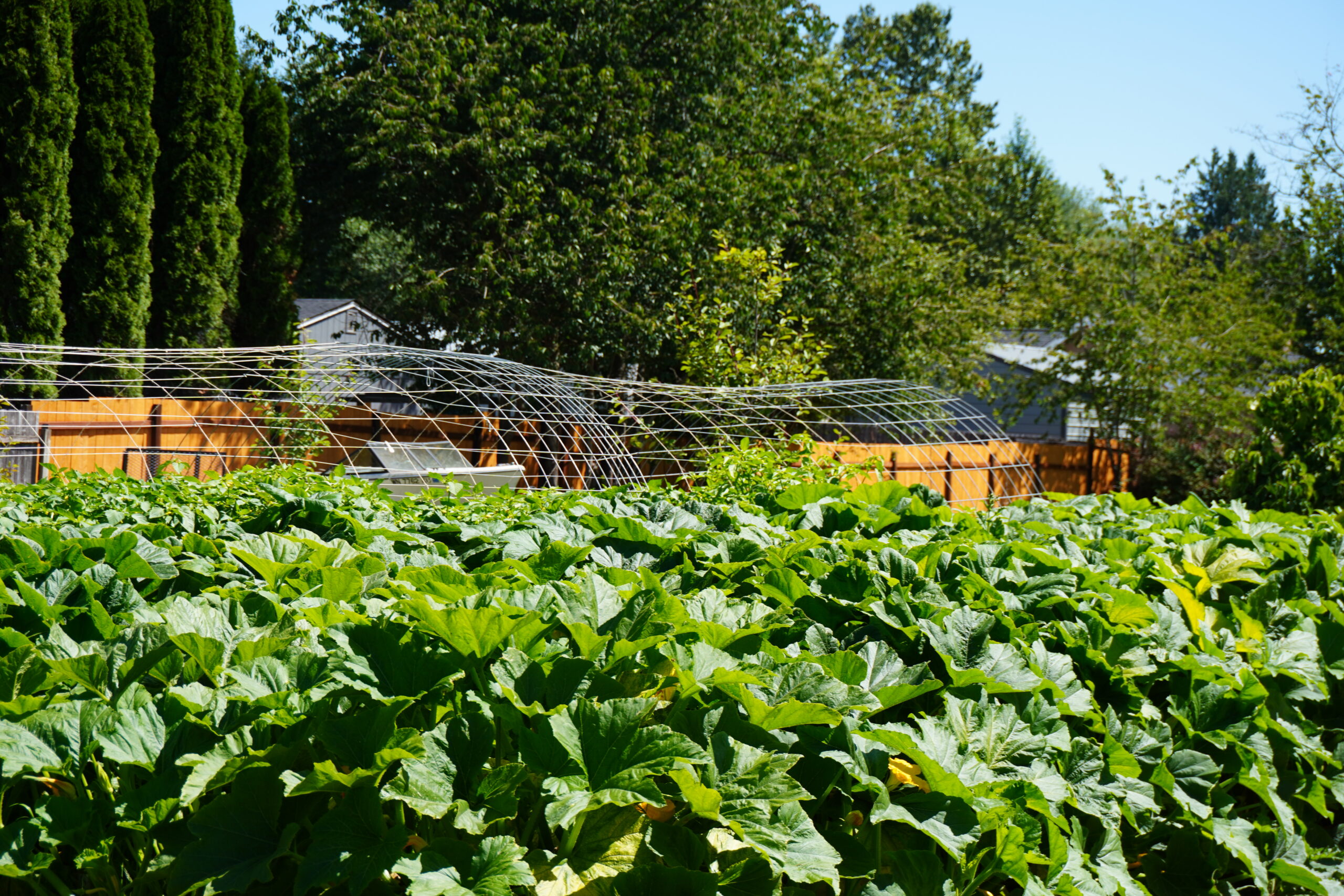
Six years ago, the property that is now Rose Island Farm was a quiet former horse pasture with tired soil, invasive plants and very little wildlife. Today, birds move through hedgerows filled with native plants, berry bushes spill over pathways and nearly every corner of the acre is producing food or medicine.
Tucked away on the Puyallup Reservation, Rose Island Farm has quietly become much more than a place to grow vegetables.Located on the homelands of the Puyallup people, the farm serves as a space where Indigenous food knowledge, traditional medicine and community come together through a shared responsibility to care for the land.
PNN recently had the opportunity to tour the farm with owner Melissa Meyer of the Tsimshian First Nation, whose passion for growing food is matched only by her passion for sharing what she knows. As she walked through rows of berries, medicinal plants and fruit trees, she stopped often to pick a raspberry or point out another example of how every part of the farm serves a purpose. The scent of lavender drifted through the summer air while garlic hung drying inside the barn, a reminder that nearly everything harvested on the farm continues its journey into food, medicine or education.
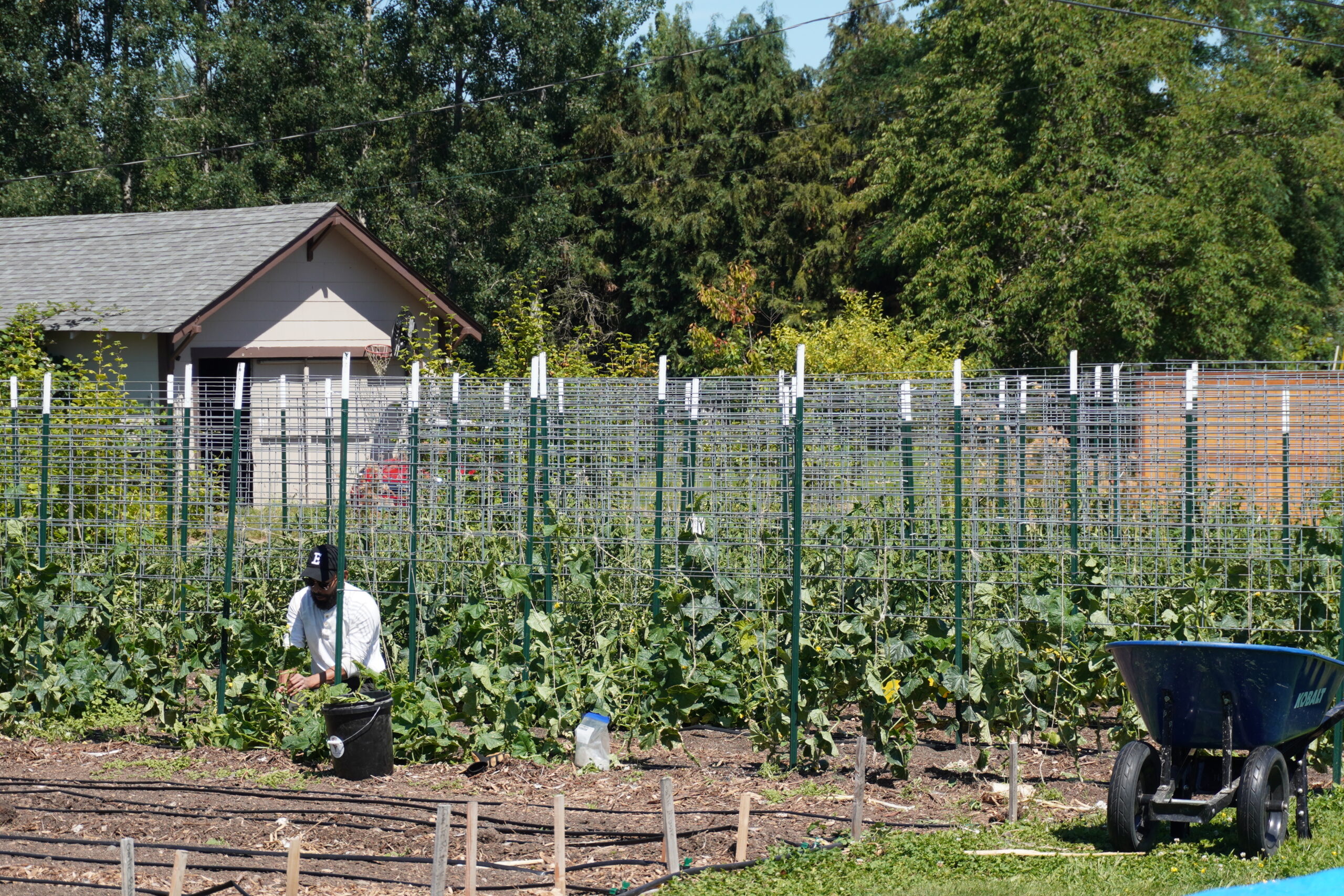
Over the past six years, she and a small community of volunteers have worked to restore the land by rebuilding the soil, planting native species and creating habitat for pollinators, birds and other wildlife. Wood piles become compost, rain gardens capture water naturally and hedgerows recreate the kind of ecosystems that once thrived throughout the region.
“Half of your work as a farmer is building soil,” she said.
For Meyer, farming is about much more than producing food.
After moving to the United States nearly a decade ago, she became increasingly interested in where food came from and how it was grown. She began buying directly from local farmers, foraging for overlooked plants and preserving traditional foods through canning, smoking, drying and dehydrating. Before long, she was teaching others those same skills in schools and Indigenous health programs, eventually leading her to create Rose Island Farm.
Although Meyer comes from the Tsimshian First Nation, she has rooted her work on the Puyallup Reservation with the goal of sharing Indigenous food knowledge across communities. She believes every Indigenous Nation carries unique knowledge shaped by its homeland, and that there is value in learning from one another. In recent years, she has worked alongside Mexican farmers to learn traditional corn-growing methods, exchanging traditional practices and creating spaces where people can reconnect with the land together. For Meyer, food sovereignty is strengthened not by keeping knowledge separate, but by exchanging it across Indigenous communities.
“None of our food ways were designed to be practiced alone,” she said.
That belief carries particular meaning on the Puyallup Reservation, where generations of Puyallup people have maintained relationships with the land, waters and foods that have sustained their community since time immemorial. For Meyer, being rooted in this place means recognizing that Indigenous food systems have always been built through relationships, not ownership. For Meyer, the farm is one place where those relationships, teachings and connections can continue to grow.
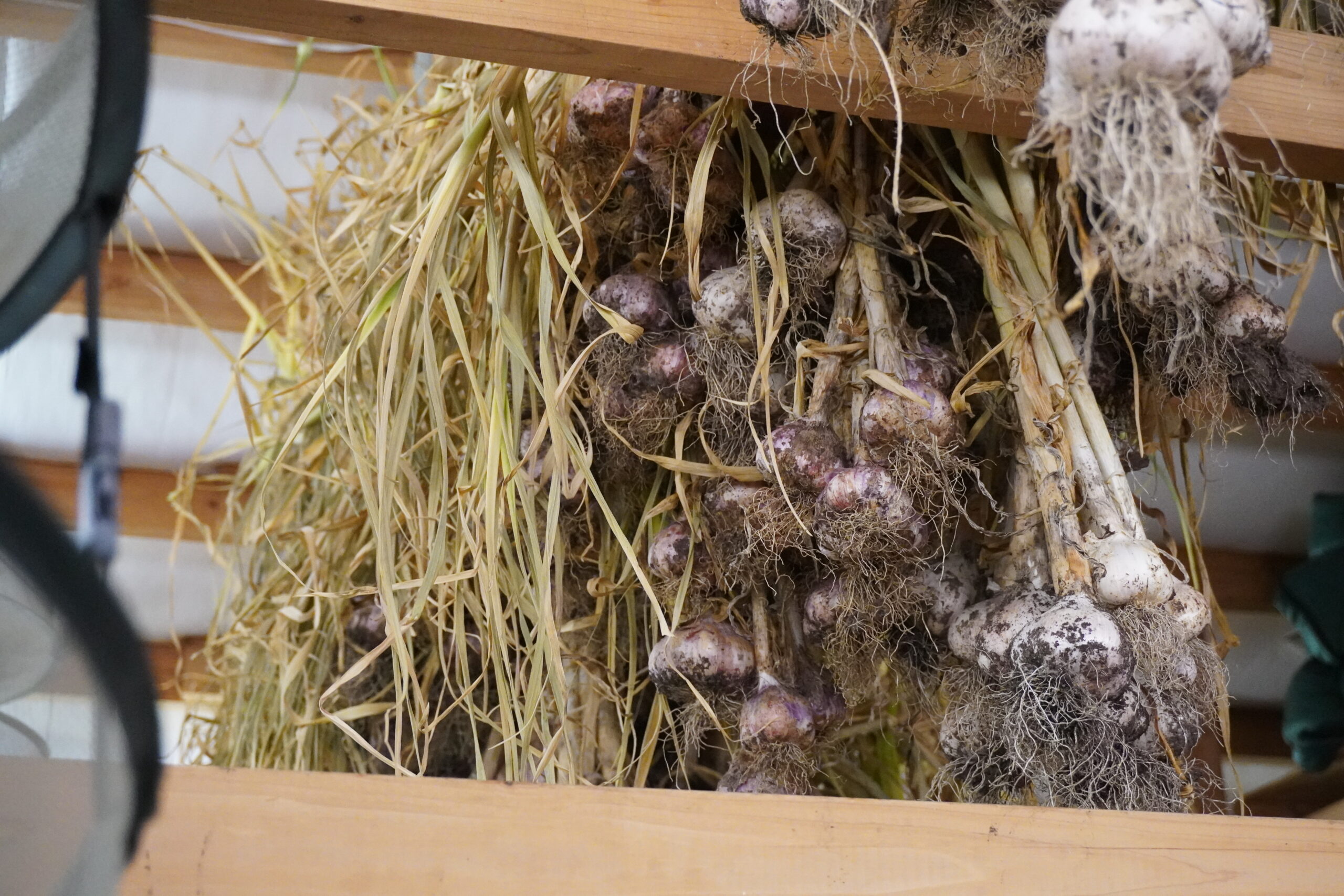
Alongside rows of vegetables are medicinal gardens filled with healing plants, herbs and flowers. Inside the barn, drying racks hold garlic, lavender and herbs harvested from the fields. Just steps away, an apothecary stores carefully labeled plants that become teas, salves, syrups and other traditional medicines. Even on a warm summer afternoon, the scent of flowers drifts across the property with every breeze.
Everything is done by hand, from planting and harvesting to drying, canning and preparing products for the community. Every process reflects the same commitment to sustainability and preserving traditional knowledge.
Community remains at the center of that work.
Twice each month, volunteers gather for what Meyer calls “Work as Medicine,” where participants help care for the farm while learning traditional growing practices alongside one another. Every Wednesday, the farm also opens its Farm Stand, offering seasonally grown produce, fruit, herbal products and goods from other Indigenous makers. The stand accepts cashless payments through Venmo and Cash App, as well as EBT, with matching benefits available to help make fresh food more accessible.
Rather than simply selling vegetables, Meyer hopes the farm encourages people to think differently about where their food comes from and how communities can support one another.
As neighboring cities continue to grow around the Reservation, Rose Island Farm offers one example of how locally grown food and Indigenous knowledge can strengthen community connections. Meyer hopes Rose Island Farm can become a place where relationships with the Puyallup Tribe and other Indigenous communities can grow through shared learning, traditional foods, medicinal plants, medicine practices, educational programs and sustainable ways of caring for the land. She imagines a future where knowledge, seeds and harvests are shared in ways that benefit everyone while honoring the traditions each Nation brings to the table.
From one Nation to another, Rose Island Farm demonstrates that caring for the land is also about caring for the community. Through food, medicine and shared knowledge, Meyer is cultivating more than a farm. She is helping create a space where relationships with the land, and with one another, can continue to grow.
Rose Island Farm hosts “Work as Medicine” volunteer days twice each month and operates its Farm Stand every Wednesday from 10 a.m. to 7 p.m. Community members interested in learning more can visit the farm during market hours or explore upcoming events and classes through Rose Island Farm. Check out their website and Instagram for more information.