For most people, Earth Day is a once-a-year reminder about protecting the environment. In our communities, that relationship to the land is not something we visit once a year, but something we carry every day. Along the Puyallup River and throughout our homelands, that connection continues through the people who return to it season after season.
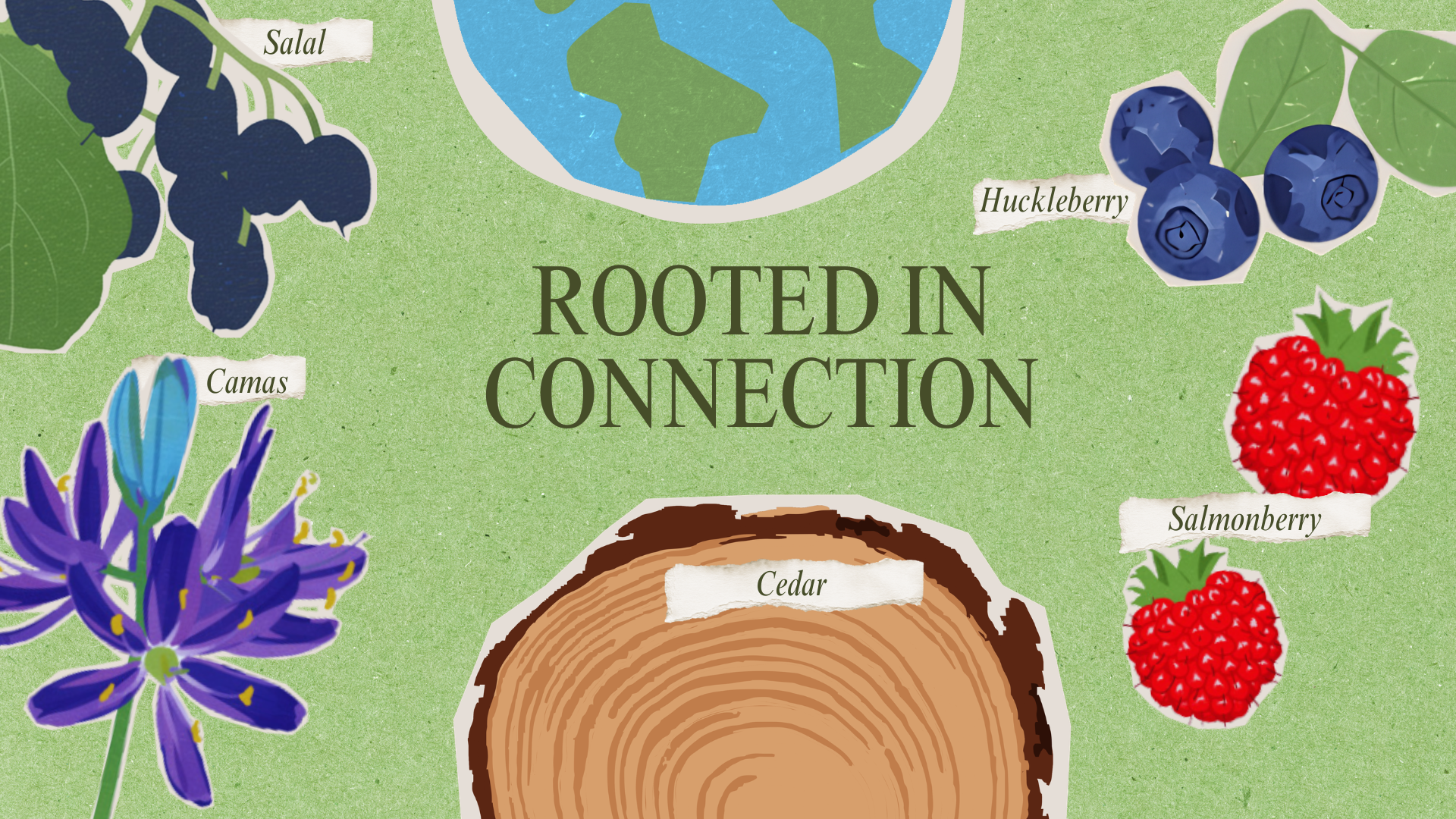
As the years pass and the environment around us changes, cedar is still cedar. Plants like camas, salal, huckleberry, and salmonberry continue to return each season, reminding us that these relationships are still here and must be maintained.
That connection is not something separate from everyday life. It is built through time spent on the land, learning by being there and paying attention. It is being shown where to go, when something is ready, and how to gather in a way that ensures those places will still be there in the future.
For many in the Puyallup community, those teachings start early and stay with them. Going out with family, returning to familiar places, and slowly learning what cannot always be explained in words. Over time, that knowledge becomes a responsibility. Not just to gather, but to care for what is there and to make sure it continues.
Camas, salal, huckleberry, and salmonberry are still gathered today, not just because they are important foods, but because they carry those connections forward. Cedar remains just as central, continuing to be used and respected in ways that reflect its place in the community.
Even as things change, those relationships remain steady. They continue through the people who return, who teach, and who take the time to maintain them. What might seem like small actions, going out, gathering, sharing knowledge, are what keep those connections strong.
Earth Day may bring broader attention to caring for the environment, but here, that care has always been present. It continues in the way people move through the land, the choices they make, and the knowledge they pass on from one generation to the next.