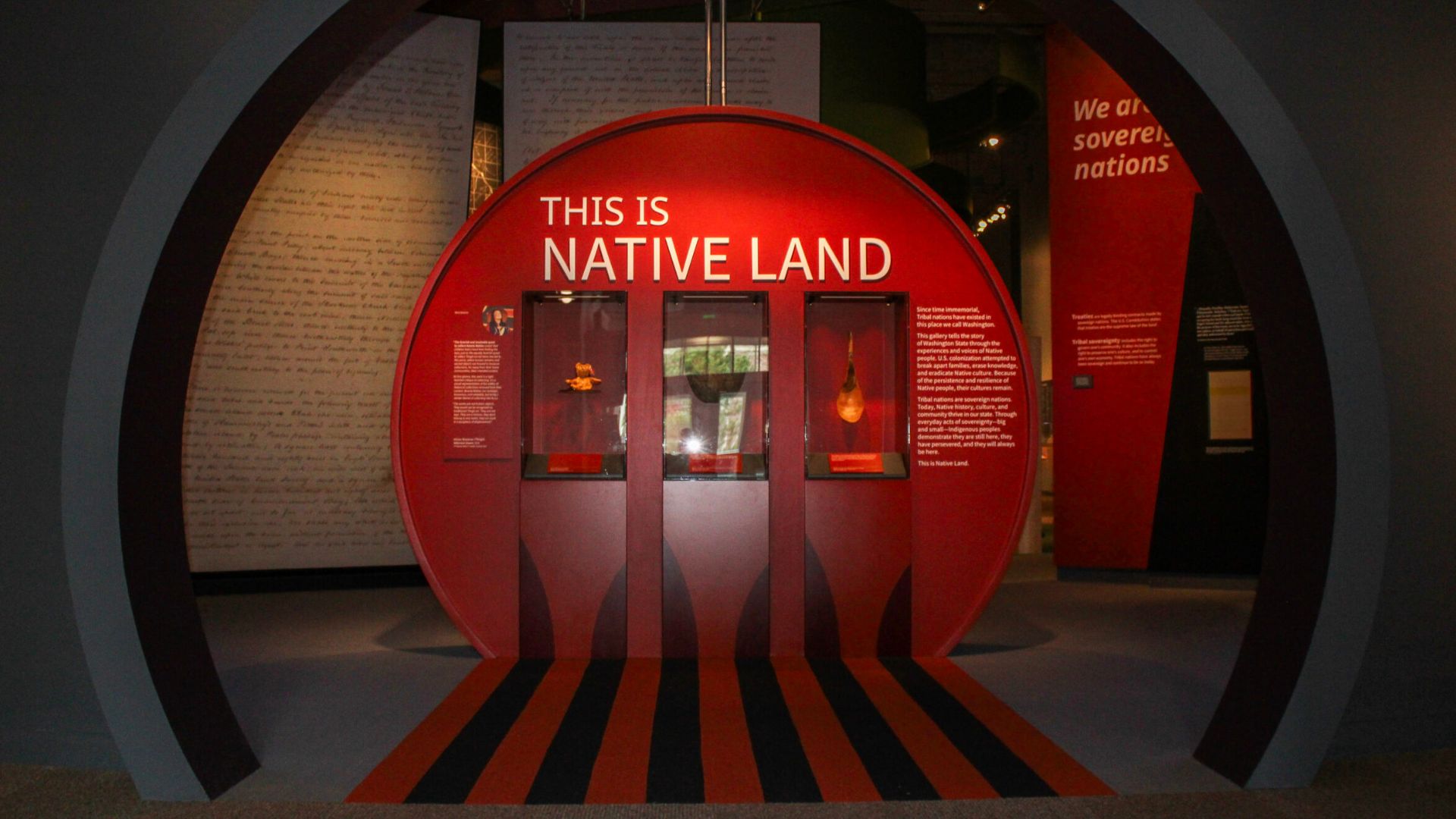
On October 19, 2025, the Washington State History Museum unveiled its newest permanent exhibition, “_This Is Native Land.”_
Making this a permanent exhibit cements the story and history of Native communities as something that cannot be erased. Positioned at the center of the museum, the exhibit sits quietly within Washington State history, not disrupting the long-celebrated narrative of European achievements, but revealing what has always existed alongside it. A reflection of the truth that Native Americans have always been a part of America’s development, even as their efforts to erase us have failed.
The exhibit is not easy to digest, and it is intentionally designed that way. It would not be fair to us to soften the harsh realities of our struggles. Visitors are confronted with what it meant to challenge the federal government in asserting the right to embrace tradition and reject modernity.
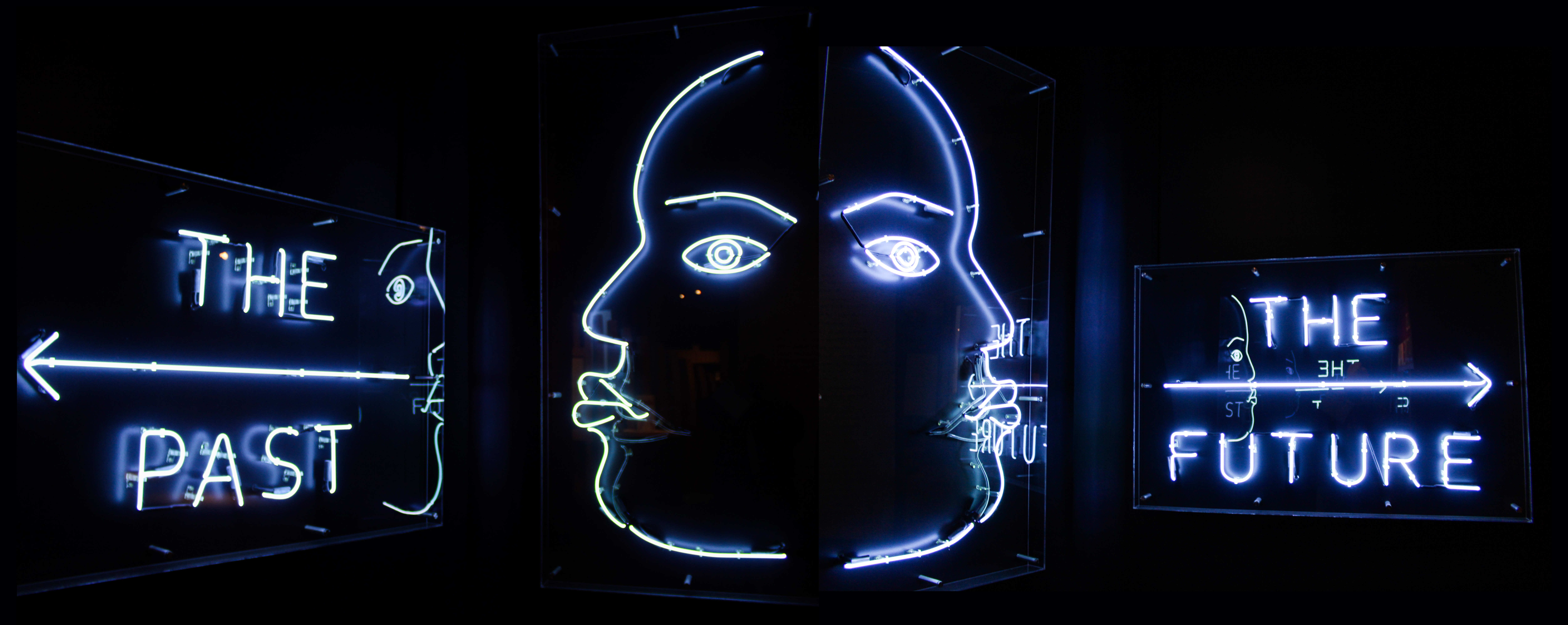
“Face the Past, Face the Future” by RYAN! Feddersen of the Coville Reservation opens the exhibition with two neon signs, to the left is the past, and to the right is the future, these options direct the viewer to alternate perspectives on how one might interpret the exhibit. The artificial choice mimics the way history is often treated as linear, cementing issues firmly in the past. Instead, the installation invites visitors to see a future within those same stories.
In an environment where Native communities were forced to either disappear or assimilate, resilience often meant incorporating culture into the very tools meant to erase it.
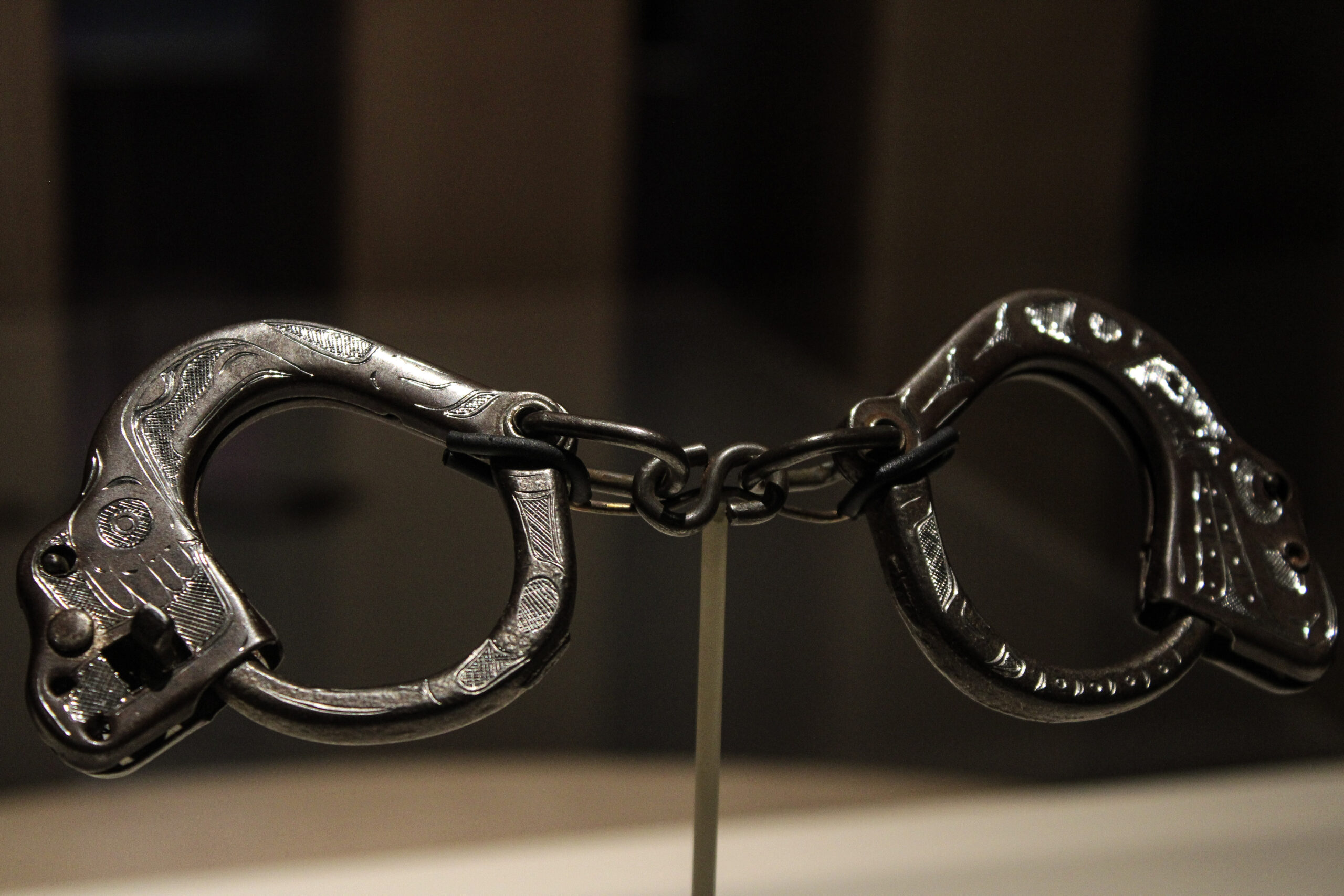
For example, the photo below is a pair of Indian Children Bracelets, used to forcibly remove them from their families. Tlingit carvers began engraving copper bracelets as a way to preserve clan identity after traditional tattooing practices were suppressed by churches and European colonizers. The bracelets reflect a broader Northwest Coast tradition of jewelry as cultural preservation, adaptation, and survival.
The new permanent exhibit is different from other exhibitions because of its lack of traditional and cultural memorabilia. There is no need to take more from Native communities to tell the story of how education, language, food, land, and the overall culture of our lives was stolen.
“This Is Native Land” instead focuses on how Native communities share knowledge, culture, and spiritual practices rooted in lived experience. These practices exist not as artifacts, but as living continuations of identity.
From perseverance and strength, Native communities have not allowed these aspects to be taken from us. Though they hold painful memories, it is important to look to the future from the past and build new experiences on top of them. Native people do not need to be taught this history. We have carried it. What this exhibit offers is not revelation but recognition.
If you’re interested in seeing this exhibit, the Washington State History Museum is open Tuesday-Sunday from 10:00am-5:00pm. On the third Thursday of the month, admission is free all day and the museum is open until 8:00pm.